Thursday, 1 January 2015

It's 2015!

Bizarre. Someone told me that 1998 is as far away as 2030 now - in 2030 I'll be 40! In my mind that's basically decrepit, but something tells me I should adjust that way of thinking.

I have a few resolutions - they're nothing big, really.

1. Make steady progress on my PhD.

Self-explanatory really - I just want to keep plodding along, doing the reading, the writing, the papers, the research - and just make progress with which both my supervisor and I are happy.

2. Develop a strong core.

My core is terrible and I am so lazy that I often don't work on this. It's something that would help my running and the water polo and everything really so my aim is to strengthen my core. More Pilates! More yoga! More planking!

3. Make 2015 the year of finishing off.

Scrapbooks, novels, academic papers, other non-academic bits of writing, books, fixing my typewriter - I have so many projects which require a bit of work and application to finish them. So 2015 is the year for new ideas to be put down the order of priority and for me to finish those things which are cluttering up my academic and personal life (as well as physically cluttering my room!)

4. De-stuffocate

'Stuffocation' became known to me as a term through this Telegraph article  and when I moved over the summer I had a ridiculous amount of stuff - not including books - most of which I don't use within a 3 month period, so it's time to stop that right now and clear out some clothes and belongings.

5. Read more books!

This is always on there - I'm aiming for 122 and also aiming to include this list. It's a bit lame but I always like a challenge and there are several books on there I would not push myself to read normally.

http://www.popsugar.com/love/Reading-Challenge-2015-36071458

Monday, 4 August 2014

Doctoral Delusion column: Sports Sadness

Original to be found here: http://www.tcs.cam.ac.uk/columns/0032793-doctoral-delusion-sports-sadness.html

I need someone to take all the sports off the telly, please. Also someone to do all my marathon and water polo training for me. At the moment, sport is the biggest distraction to my thesis. If I’m not watching it, I’m training to compete in it. Wimbledon, the Tour de France, the Commonwealth Games – I’ve enjoyed every minute, almost definitely to the detriment of all the writing I’m supposed to be doing.

I can’t help it, I just love sports. If you’d pegged me when I was 18 and told me that six years later that was something I’d be saying, I would have walked into a wall laughing. I hated sports at school. I didn’t grow above 5 foot 2 until I was 18, and my competitive drive went into academia. It doesn’t win you many supporters in the PE department when you just don’t care.

Also, I think my teachers thought it was funny when I could barely put the shot past my foot, and when I hit myself in the head with a javelin. (Admittedly, that was hilarious.)

But Cambridge had a funny way of putting sports right in front of me, like it does for so many people, and since then athletic endeavours have filled a substantial part of my life. Most of them have been team-based, and it’s here that the summer falls down - undergraduates are the driving force behind 90% of Cambridge’s sport, and when undergraduates aren’t here, the sport stops. There are town clubs, most notably for rowing, but also for other sports, and there are the exceptions; grad colleges like Hughes Hall and Darwin run graduate sports throughout the summer.

Largely, however, the sport is gone, and with it, a ready made chance at socialising. Training on your own is lonely, boring, and not as effective. Other people push you to do better – academics or sports, that’s just the truth. I’m a slow runner, and my last long run was 15 miles, on my own. That’s two and a half hours with no one to talk to, and my iPod gave out on the last three miles. Faster, better runners than I undoubtedly aren’t bothered with this, seeing as they don’t run with music and they have pacing and splits and the will to go faster.

I, unsurprisingly, do not have the will to go faster. I have the will to grimly hang on for 15 miles, preferably whilst talking to someone, and if I’m training on my own that small pleasure is denied to me. Come back, undergraduates. All is forgiven – your peppy youth, your swarming tendencies, your essay crises. I need someone to train with, or that grandma who I lapped on my last run is going to set her Jack Russell on me. I can’t stave off a terrier attack on my own. That’s one sport I just can’t get along with.

Thursday, 17 July 2014

(5) Days of Summer


Full article can be found here: http://www.tcs.cam.ac.uk/features/0032734-5-days-of-summer.html

I receive my Finals results and they’re not good. I find myself a job in Finland, some backwater town where there’s a summer school teaching Russian kids English. It’s sunny, all day, almost all night too, and the college we teach at backs onto a river. There’s a pier. I spend most of my first two weeks gloriously tanning there, reading my way through my new Kindle, after we finish teaching at 2pm. I go swimming in the river and can tell when I should go home by watching the sun dwindle down over the bridge.

Later, we re-enact the American Civil War with children, get drunk off vodka the teenage students provide for us, and begin surviving only off rye bread and black coffee as all the other food provided is just too Russian. But the best part is always The Vaccines in my ears,How to be a Woman on my screen, and my sun soaked skin.


Doctoral Delusion column: In Limbo

Original to be found here: http://www.tcs.cam.ac.uk/columns/0032746-doctoral-delusion-in-limbo.html 

This column is late. Last night I went to the pub to celebrate my friend’s MPhil thesis hand in, scarfed down my share of the 2-for-1 pizza, had 1 pint, and was then (embarrassingly) so tipsy when I came in that I fell asleep with my laptop on my face whilst trying to write this before the deadline. Not a great start. Welcome to postgrad life.

Summer is a pretty strange limbo time for grad students. Those on one year courses are frantically finishing theses and handing in; first year PhD students are preparing and being examined on their end of year reports; for those further on than that, it’s all a haze of fieldwork, data, and the hellish writing up of the final product.

I’m putting together my first year report and as such am spending all my working days stuck in a library. Imagine exam term but you’re all on your own and everyone else is having fun. I’ve decamped to the ground floor so I can’t see the sun and know how much lovely weather and excitement I’m missing. If I’m working in my room I draw the curtains and create my work cave – but that’s also because the window above my desk looks directly into the room across from me. 1960s college accommodation blocks always have such strong echoes of the Panopticon.

The thing is, people think being a grad student during the summer is all relaxing in empty colleges, paddling in the sun at Jesus Green Lido, and enjoying beautiful Cambridge with the minimal amount of stress.

People really couldn’t be more wrong if they tried. Summers for grad students are for conferences (for the lucky – Dominican Republic, for the unlucky – Glasgow and Hull), studying uninterrupted by the minutiae of term life, and preparing journal articles for autumn submission dates, whilst considering attaching a snowplough to the front of your bike just so you can get to Sainsbury’s through the tourists for some actual real food.

For me, it’s also a good long stretch to get in some fiction writing, catch up on blog posts and rack up some vaguely interesting reflective prose work. In one of my more foolish moments, I totted up the final number of words I’ll end up with by the start of Michaelmas on the current schedule, and it was around 175,000. Forgive me if I seem a little panicked by that, but it works out at around 3,000 words a day. That’s roughly two hastily written supervision essays, one carefully constructed portfolio essay or a chapter of a dissertation.

Before you even ask, of course the 600 words of this column are being totted up as part of today’s count. If I wasn’t previously, I’m now incredibly glad for the late night essay crisis training of my undergrad because I’m beginning to understand how important it is to always just get the words on the page. By the end of summer, the ‘invisible words’ – those written, then redrafted, edited or deleted – will double the final polished total.

It’s so inefficient I want to hit my head on my keyboard, but only if that produces more words. No wonder I’m drowning my woes in beer and pizza when I celebrate that someone else’s academic journey is over. Welcome to postgrad summer. It’s rubbish.

Monday, 9 June 2014

Recap: Glasgow Picturebook Conference Day 1

When the information about this conference popped into my inbox I was totally thrilled and confirmed my attendance almost immediately. Then the list of speakers came out and I thought WOW - and booked my train tickets in a state of high excitement.

As I struggle through writing my upgrade report I do sometimes feel like I am the only person in the world (or at least Newnham library) who cares about picturebooks. Rationally - I know this is not the case. But when other grads discuss their ~*~very important~*~ work on haematology, oncology, global warming, legal rights for refugees, my talking and thinking about picturebooks becomes very small in comparison.

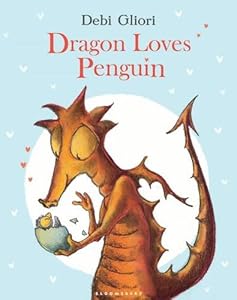
However this conference kicked off with a glorious presentation from Scottish Booktrust on the wonderful work they do getting books into the hands of children, giving out bags of books from birth to almost 5 years old, inspiring us all to think about how books actually get to the children who are primarily meant to be reading them. Then we moved on to the AMAZING (capslock apology but I can't help it - there's no other word!) Debi Gliori, whose discussion of the process of picturebook making demonstrated the strenuous research, emotional investment and altogether the genuine love that goes into the creation of such an object really made us all think about the author's vision of the picturebook and the impact it will have - I also think her reading of 'Dragon Loves Penguin' made many of us tear up a little bit! I also fangirled embarrassingly and told Debi how much I loved the 'Pure Dead...' series when I was younger - bring back Nanny McLachlan, please!

Definitely buying this for my mum.

After a break, we heard from James Robertson of Itchy Coo, talking about Scots language books and the importance of 'legitimising' them as a form of literature as they work in the language that many children and young people in Scotland use comfortably every day instead of the more formal English. This issue is really important and James' talk was so informative and the work that Itchy Coo does is so fun and inspiring. Learning that a monkey is called a 'puggie' in Scots was probably the highlight of my day.

One of Itchy Coo's most brilliant products (IMHO)
Actually, it wasn't. Because the last speaker was Dom Kingston from Nosy Crow, who publish children's books, but specifically for me they publish picturebooks which play with notions of interactivity and the work of the reader in insanely great ways. They develop apps as standalone items rather than relying on translating or transposing a book to the screen and they also have some incredible codex books which work in different ways - such as folding out to a playmat. Dom's presentation was so fascinating - although as Head of Publicity he described himself as 'the last baton runner in the race' and the view on how publicity is changing with book blogs, social media, and increasing reader activity was really cool, I was most interested when Dom showed a video of an app's code being mapped to demonstrate the pathways that are available to the player/reader of the app. The video below is just a small snippet of how Nosy Crow make their apps but unfortunately doesn't show what I'm talking about with this code mapping thing!


Please Nosy Crow can I have this for my PhD? I promise I'll treat the technology right and use it nicely...it could be just the thing to allow me to finally map in an unconvential sense (rather than just grids of screen tracking) how a child experiences an app. Any chance of you sharing it with me?

I'll stop being cheeky now and leave, but I'll recap day 2 very shortly!